How to Sell Your Music Directly to Fans (2026 Guide)
Ali, founder of Aamizeh. Updated . 11 min.
This is for an independent artist who wants to sell a song as a file. You can do that with no label. You do need a finished recording, a clear price, and a checkout your fans will actually finish.
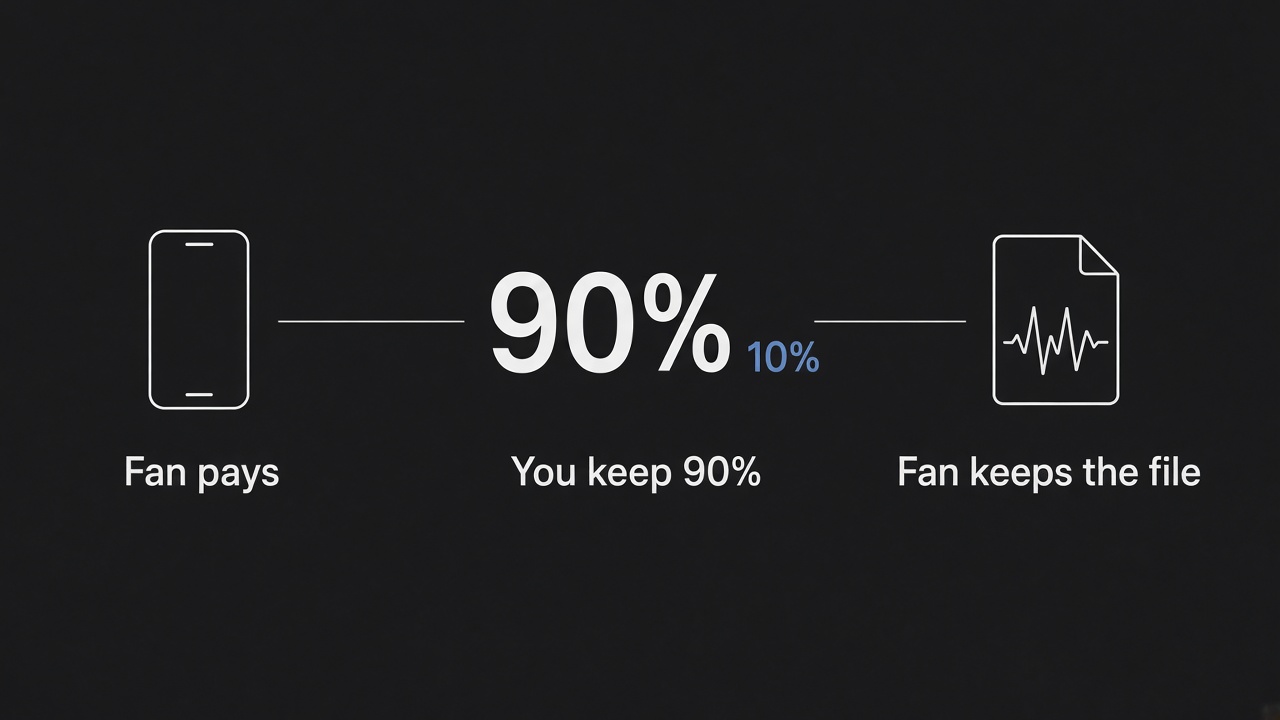
A direct sale means the fan pays the price you set and keeps the file. A stream pays from a pool the service divides later. A commonly cited average is about $0.003 to $0.005 a play. That is not a price you chose.
Why does selling directly to fans matter?
Streaming is useful for being found. It is a weak way to be paid by a small, loyal audience. A fan who plays your song every day still sends you a slice of a pool. A fan who buys the file pays the number on the page.
You also learn who paid. A receipt is not a follower count. The person who paid can hear about the next record, if you asked and they agreed. That relationship sits with you.
You do not have to leave streaming. Many artists use it as the listening room and a direct sale as the thing a committed fan can buy. The mistake is treating those as the same product. There is no single official rate, and it moves with the country and the plan. Use a sale when you want a price you can say in one sentence.
What do you need before you start?
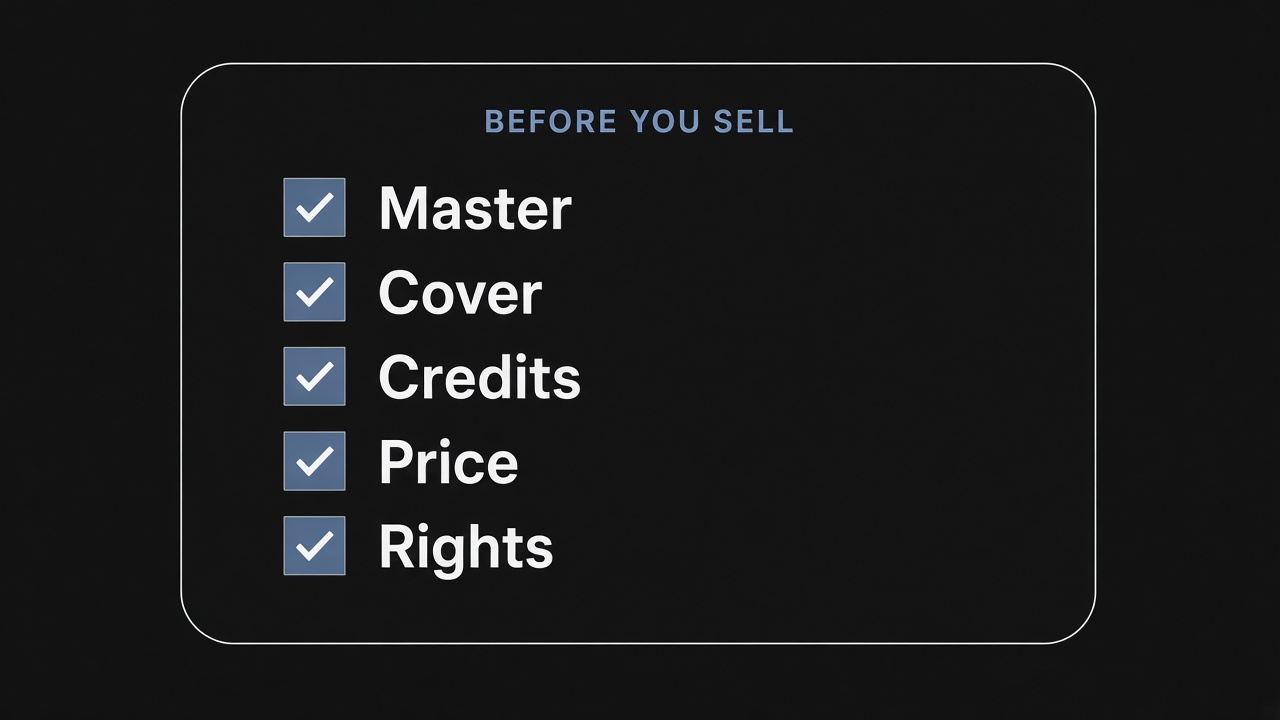
Finish this before you open a store account.
A master you are allowed to sell. If someone else owns part of the recording or the song, get that in writing first. A beat lease that forbids a commercial release is not a small detail. Cover songs need their own permission.
Cover art that reads at thumbnail size. Square art is what stores expect. The title should still be readable when the image is small.
Metadata. Title, artist name, and who else is credited. Use the same spelling everywhere, including on streaming, so fans can search you. If the track is explicit, mark it. If it is a remix, say whose song it is.
A price. Decide it before you upload, not in the moment the form asks. More on that below.
The rights you actually have. Owning the master is not the same as owning the song. If someone else wrote it, you may still owe the writer. A sample you found online is not a right. Leave that track off the store until the rights holder answers you.
A way to get paid. Open the account before release day. Setups fail in boring ways: a mismatched name, a wallet address with one wrong character, a form that wants an ID you do not have with you.
Where can an independent artist sell music?
You are choosing a checkout and an audience, not a personality. Most working artists use more than one. Here is an honest pass at the usual options.
Your own website
You own the page and, if you are careful, the email list. Fans see your name, not a marketplace grid. You can pair the song with a tour date or a bundle you designed.
The cost is the work. You need hosting, a way to take payment, and a way to deliver the file after the payment clears. A typical online card fee is about 2.9% plus $0.30 a charge. Currency conversion can push that toward 4% or 5%, and a new seller is sometimes paid days later. You also have to send people to the site yourself. A beautiful page with no visitors is a brochure.
Bandcamp
Bandcamp is a store a lot of music fans already understand. They expect a normal checkout and, on many pages, a shirt or a record as well as a file. You are not teaching the fan a new habit.
On a normal day Bandcamp's published digital share is 15%, and it can fall to 10% after $5,000 in sales. Processor fees sit on top of that, often about 4% to 6%. A special sale day waives their share and is not a normal day. The dated figures are on our comparison of Aamizeh and Bandcamp.
You are still a guest. Their audience is large because it is theirs. Meet fans there, and keep a path back to you.
Aamizeh
Aamizeh is a purchase store, not a streaming service. A fan hears a free 30-second preview, then buys the track file. You set the price. You keep 90 percent of the sale. Aamizeh takes 10 percent. A TON smart contract enforces that split. The deal is non-exclusive, so the same music can stay on Bandcamp, on streaming, or on your own site.
Fans pay with USDT or TON on the website, with USDC or SOL through a Phantom wallet, or with Telegram Stars inside the Telegram Mini App. Stars sales settle on a monthly ledger. Other payouts go to a TON wallet you register, such as Tonkeeper. The store is on the web and inside Telegram.
That fits if your fans will pay that way, or if you want the share in a wallet you hold. It is a poor fit if your audience only wants a card form and a vinyl bundle. Aamizeh does not sell physical merch.
The wallet side is in how crypto payments work for musicians. To open a page, apply as an artist. You do not have to do either to use the rest of this guide.
Telegram and other communities
A chat is not a store, but it is often where your real listeners already are. A release post in a Telegram group, with a short clip and one link, beats a dozen vague stories. The same is true of a close Instagram broadcast or a Discord you actually answer.
The advantage is trust. These people already chose to hear from you. The limit is reach. A community does not introduce you to strangers. Use it to sell to people who know the songs, and use a public store when you want someone new to stumble in.
Merch and bundles
A shirt or a cassette can earn more than the song on its own, because the fan is buying an object. If you press vinyl, you also take on manufacturing, shipping, and unsold stock. Price the object so the postage and the maker get paid.
A file-only store can sit next to a merch shop. Tell the fan which link is the song and which link is the shirt.
How should you price your music?
Pick a price you can say out loud. Then leave it alone for the first month.
Would a fan who already likes you pay this, tonight, from their phone, for a file they keep? If not, the price is a wish. If it feels high only because you are comparing it with a stream, you are using the wrong unit.
A single is easier to buy than an album. The album should cost more than one song from it. You can change the price later. You do not need a sale banner on day one.
Name the price in money the fan understands, even if the checkout is in a coin. "This track is 2 dollars" is clearer than a string of token units. On Aamizeh you set the price yourself.
A free file is useful when you want an address more than a payment. It is a bad default if you are funding the next recording. Give one song away, and let the next one be the thing they buy.
How do you get the first buyers?
The first buyers are almost never strangers. They are people who have already heard you: a show, a group chat, a list you have been writing to, a friend who asked for the song.
Start with the list you have. Send one note: what the song is, what it costs, that they keep the file, and one link.
Use a real preview. Thirty seconds of the chorus beats a caption that says "link in bio." On Aamizeh the preview is 30 seconds, then the purchase. On your own posts, start the clip where the song starts to feel like itself.
Release day is a push, not a mood. Tell people the morning it is buyable. Tell them once more when you have something new to say, such as a lyric or a thank-you. Then stop.
Ask for the address. If the store or your site can collect an email with consent, use it for the next release. A post disappears. A list is how the second record finds the people who bought the first.
Play live, then point at the file. At the end of the song, say the store and the price. People in the room already did the hard part.
Do not buy fake plays to decorate the release. The people who pay can tell, and a platform that notices can take the page down. Skip any promotion service that will not say where the clicks come from.
How do you sell a track on Aamizeh?
This is the practical path if you want Aamizeh as one of your stores. It is optional. The rest of the guide still stands if you never open an account.
- Apply as an artist at the artist application and use the name fans already search.
- When you are in, upload the master and the cover, and write the title and credits the way they should appear in public.
- Set your price. You can also mark a track free if that is a real decision, not an accident.
- Register the TON wallet that should receive payouts. Check the address before you save it. A payment to the wrong wallet cannot be reversed.
- Share one link to the track. Say it is a file they keep, mention the 30-second preview, and name the price in plain money.
You keep 90 percent. Aamizeh keeps 10 percent, enforced by a TON smart contract. On the web, fans pay with USDT or TON, or with USDC or SOL through Phantom. In the Telegram Mini App they pay with Stars, which settle monthly on a ledger. The same recording can still be sold anywhere else.
If the wallet part is the sentence that lost you, pause and read the crypto payments guide before you paste an address you do not recognize.
What mistakes cost you the sale?
Uploading music you cannot sell. A lease, a sample, or a feature you never cleared becomes a problem after the song starts to move. Wait.
A preview that is the wrong 30 seconds. Silence, a count-in, or a verse that does not sound like the song means the fan never reaches the price.
Too many links. Give one link for the sale. Mention streaming in a second line if you must.
Hiding the price. Say the number.
Leaving payout setup until release hour. A missing wallet, or a seed phrase typed into a chat because someone "from support" asked, is how the money disappears. No store needs your recovery phrase. Not Aamizeh, not anyone else.
Discounting before anyone has paid full price. You teach the audience to wait. Let the price stand until you have a reason, such as a new release.
Selling direct is the offer you make to someone who wants the file. Make it obvious, priced like you mean it, and easy to finish on a phone.
Questions
How do I sell my music online without a label?
You need a finished master, art, a price, and a place that can take the payment and deliver the file. A label is a business partner, not a requirement. You can sell from your own site, from a store such as Bandcamp, or from Aamizeh, and you can use more than one.
What is the difference between streaming and a direct sale?
A stream pays from a pool the service divides. You do not set that price. A direct sale is a price you name. The fan pays it and keeps the file. A commonly cited range is about $0.003 to $0.005 a play, and it is not a rate you can invoice.
Can I sell the same music on more than one store?
Often yes, if the store is non-exclusive. Aamizeh is non-exclusive. Another store may not be, so read its terms before you assume the same.
How much should I charge for a song?
Charge a price a fan of yours would actually pay for a file they keep. A single often sits near the cost of a coffee. An album should cost more than one track. There is no correct number for every artist.
Do I need a distributor to sell direct?
A distributor is how many people reach large streaming services. It is not how you sell a file to a fan who already wants it. Direct sales and streaming distribution solve different jobs, and plenty of artists do both.