Crypto Payments for Musicians, Explained Simply
Ali, founder of Aamizeh. Updated . 9 min.
This guide is general information, not financial or tax advice.
You can get paid in crypto as an artist without becoming a trader. A fan pays for a file. The payment lands in a wallet you hold. That is the whole idea. The new words are wallet, coin, and fee. None of them require a course.
If you only wanted the music-business side of a direct sale, start with how to sell your music directly to fans. This page is the payment side, written for someone who has never opened a wallet.
Why do crypto payments matter for musicians?
A card payment assumes a bank and a processor that will work with you. Plenty of artists do not have that. A wallet does not ask which bank you use. A fan in another country can pay the same way, if they can hold the coin the checkout asks for.
A confirmed transfer is not a card payment sitting in review. On TON and Solana that often takes a few seconds. A fan generally cannot reverse the payment through a bank. That protects you from a chargeback, and it means a payment to the wrong address is gone. Check the address.
Stars inside a Mini App let a fan pay without a second app. That settlement is monthly, covered below. It is not the same as a coin arriving the same day.
This is not a reason to keep rent in a coin that moves hard in a week. Know which payment is steady and which one is a bet.
What are the words, in plain language?
A wallet holds the keys to an address. The address is what you share so someone can pay you. The wallet is not an account at Aamizeh. We cannot log in and move the coins.
A seed phrase is a list of words that can rebuild those keys. Anyone who has the words has the money. The setup section is where that gets specific, because it is the part people skip.
A stablecoin such as USDT or USDC is meant to stay near one US dollar. That is a design, not a guarantee. USDC traded near $0.87 for a short stretch in March 2023, and USDT has also left $1, usually by less. Artists use them when they want the sale to feel like a dollar amount.
A volatile coin such as TON or SOL moves against the dollar. If you hold it, what you can turn into rent later may be higher or lower than on the day of the sale. That is the coin, not the song.
A network fee, often called gas, is what you pay the network to move coins. It is not Aamizeh's 10 percent. A simple TON transfer is often well under one cent. Solana's base fee is a fraction of a cent, and a priority fee can add a little more. You need a little of the network's own coin to pay that fee when you send something onward.
An off-ramp is a service that turns coins into money in a bank. It is optional until you need local currency, and it is not a list of companies to use.
How do you set up a Tonkeeper wallet?
Tonkeeper is one common wallet for TON. The screens move around between versions, so this is the sequence, not a screenshot tour. If a step on your phone uses a different label, follow the one that talks about creating a wallet and writing down words.
- Install Tonkeeper from the official store on your phone, not from a link in a message.
- Create a new wallet. Write the seed phrase on paper, in order, then confirm the words the app asks you to repeat.
- Store that paper somewhere that is not your phone and not a photo roll. A second paper copy in another place is reasonable.
- Set a passcode or biometric lock on the app so a person holding your phone cannot send coins.
- Copy your receiving address from the app and use that when a store, including Aamizeh, asks where to pay you. Compare the first and last characters after you paste.
Do this before release day. A wallet made in a hurry is how a phrase ends up in a notes app and stays there.
How do you protect the seed phrase?
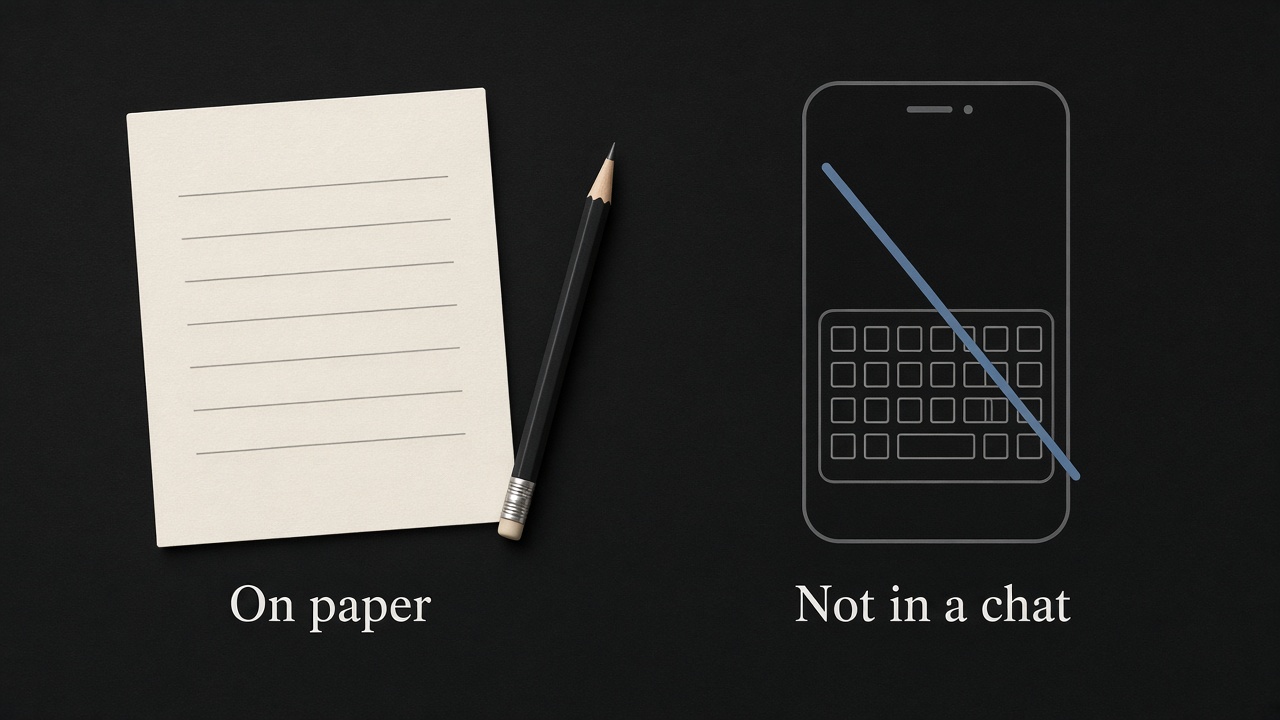
Write it on paper. Do not type it into a website, a document, a screenshot, or a chat, including one that says it is support. Aamizeh will never ask for it. Anyone who asks is trying to take the money.
Do not keep the only copy on the same phone as the app. If the phone is lost and the phrase was only on the phone, both are gone.
If someone else has seen the phrase, move the coins to a new wallet with a new phrase. Changing the app passcode does not retire the old words. The phrase is the key. The passcode only locks that device.
Tonkeeper shows 24 words. Write all 24, in order, from the screen in front of you.
How do fans pay on Aamizeh?
Aamizeh sells the file. It is not a streaming service. The fan can hear a free 30-second preview, then pay the price you set.
On the website, the fan pays with USDT or TON. Through a Phantom wallet, the fan pays with USDC or SOL. Inside the Telegram Mini App, the fan pays with Telegram Stars. Stars do not arrive in your TON wallet with the other sales. They are recorded on a monthly ledger and settled on that cycle.
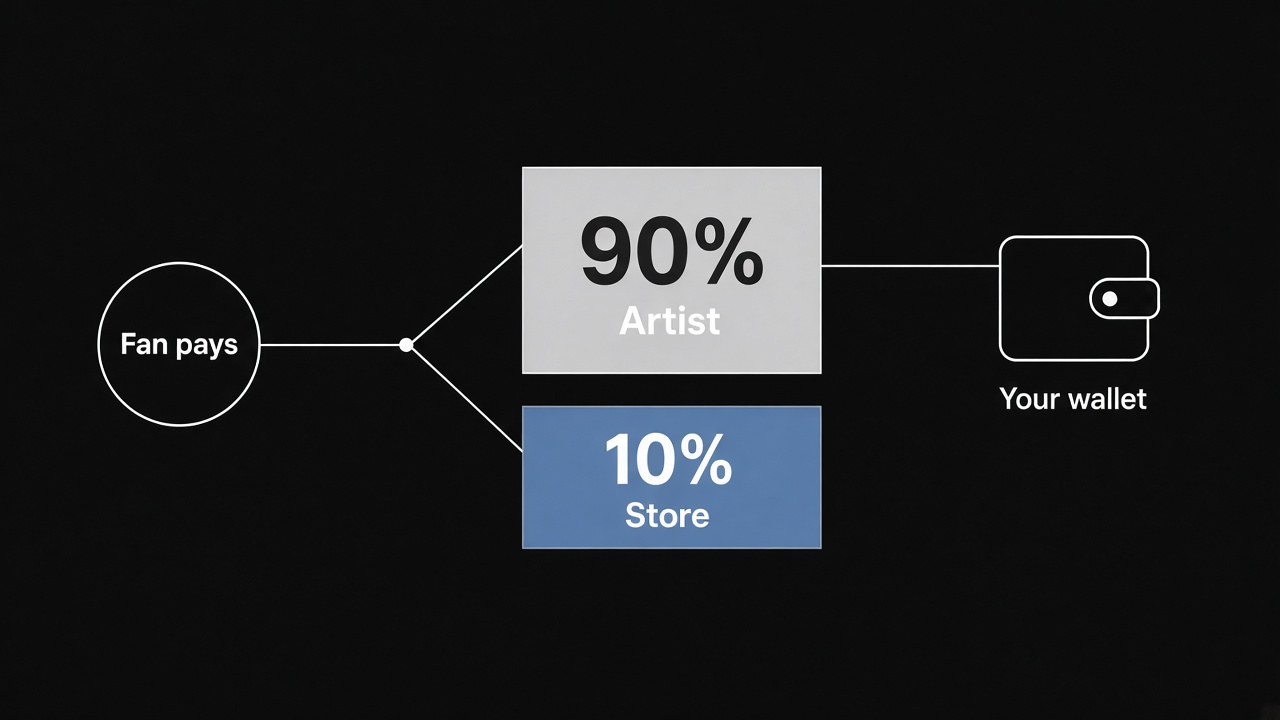
You keep 90 percent of the sale. Aamizeh keeps 10 percent. A TON smart contract enforces the split. You register the TON wallet that should receive payouts. The agreement is non-exclusive, so this does not stop you selling the same music on your site or on another store.
If you are deciding between this and a card-and-merch store, read the Aamizeh and Bandcamp comparison rather than treating them as enemies. Plenty of artists can use both. To open a page, apply as an artist.
When you tell fans how to pay, name the method in their language. "Pay on the site with USDT, or open the song in Telegram and use Stars" is a useful sentence. "We accept crypto" is not, because they will not know which app to open.
How do you turn crypto into regular money?
You do not have to. If your collaborators and your rent can be paid from the wallet, converting is an extra step with an extra fee. If you need money in a local bank, you use an off-ramp: a service that buys the coin from you and sends local currency onward.
The service will ask who you are. Serious ones ask for identification. They charge a fee, often under 2%, and the rate on screen is rarely the public price from a minute earlier. The bank leg often takes the same day or a few business days.
Whether that service is legal where you live is your question. Some countries restrict which coins residents may sell. Look that up before you move a large balance. This page will not name a company, because a name would pretend we know your country and that company's behavior next month.
Keep a record: date, amount, what the fan bought, and what you later received in local money.
What are the risks, honestly?
The price moves. TON and SOL are not dollars. A sale that looked like a certain amount on Tuesday can look different on Friday if you still hold the coin. Stablecoins are calmer and still not magic. If a coin meant to be $1 trades at $0.90, you wear the missing 10 cents.
Lost keys are lost money. There is no password reset. If the seed phrase is gone, the wallet is gone. If you send coins to an address you mis-typed, they are gone. Slow down on every address you paste.
Scams target artists specifically. A message about a playlist, a feature, or a "wallet verification" will ask you to connect a wallet or type the phrase. Connecting a wallet to a random site can approve a transfer you did not mean to sign. Read the prompt. If it is not the store you opened yourself, close it.
Taxes exist. Treat the sale as income, and a later cash-out as a possible second taxable event. The rate is your country's. This guide cannot tell you what to file.
The tool can be the wrong one. If your fans want a card and a T-shirt, a crypto checkout is an obstacle. Use it where it removes one: a border, a frozen processor, or a fan who already pays inside Telegram.
Create the wallet on a quiet afternoon. Write the phrase on paper. Send a tiny test amount so you have seen coins arrive before a fan's money does. Then go back to the music.
Questions
Do I have to understand crypto to get paid?
You need a wallet you control, and you need to know that the recovery phrase is the wallet. You do not need to trade, and you do not need to hold a coin that jumps around if you would rather keep a stablecoin.
What is a TON wallet for an artist?
It is an address that can receive TON and tokens that live on the TON network, including USDT on TON. On Aamizeh, payouts go to the TON wallet you register, for example a Tonkeeper wallet.
Can fans pay with a normal card?
On Aamizeh they pay with USDT or TON on the web, with USDC or SOL through Phantom, or with Telegram Stars in the Mini App. If your fans will only use a card, use a store that offers one, and read the comparison with Bandcamp before you pick.
What if I lose my phone?
The seed phrase, written down and stored offline, is how you restore the wallet on a new phone. Without that phrase, the app store cannot give the wallet back. Aamizeh never sees the phrase and cannot reset it.
Is this financial or tax advice?
No. This guide is general information, not financial or tax advice. Rules depend on where you live. Check them before you sell coins for local money or file a return.